Sub-Zero Refrigerator Repair
Sub-Zero Refrigerator Not Defrosting: Causes and Safe Fixes
A Sub-Zero refrigerator that is not defrosting almost always has a defrost heater, thermostat or sensor that has stopped working, or a door seal letting damp room air in. Melt the ice gently, never chip it, and book a diagnosis if the frost is back within days.
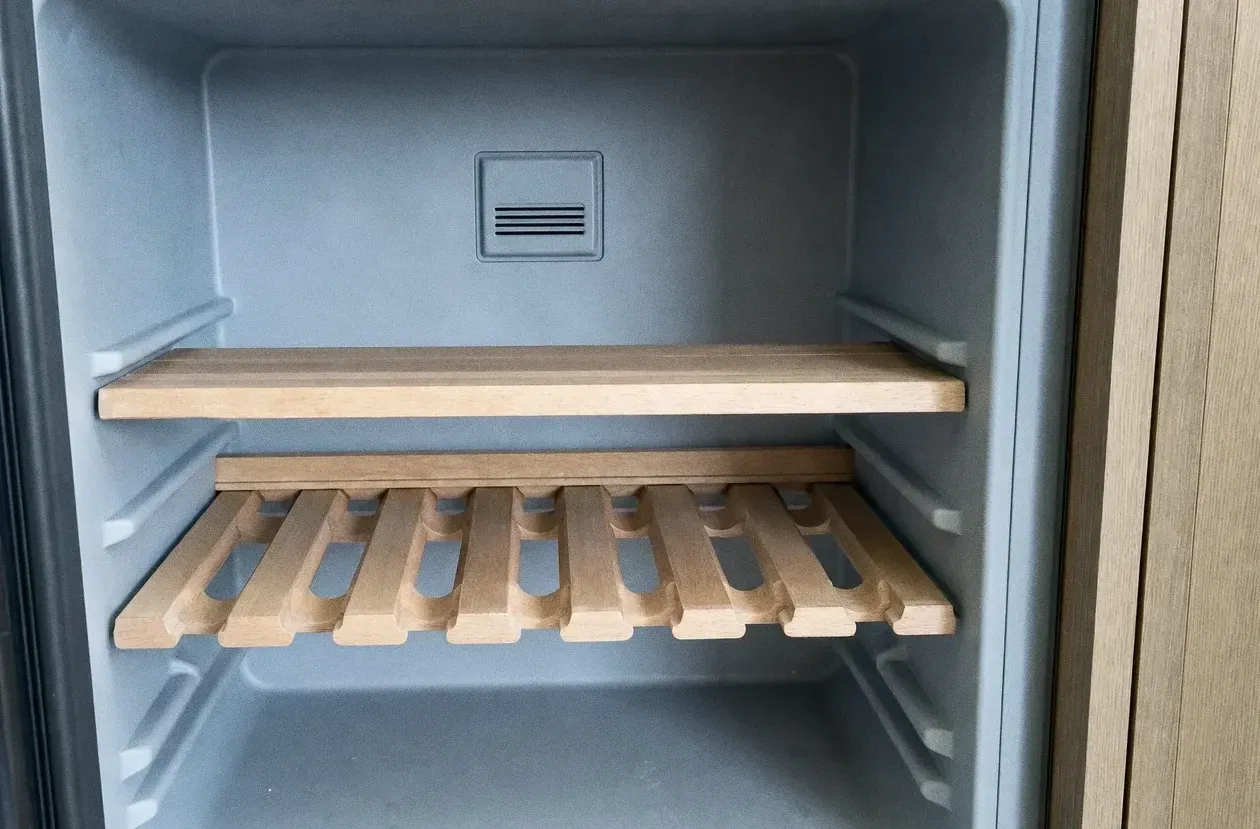
When a Sub-Zero refrigerator is not defrosting, frost keeps building on the evaporator coil behind the rear panel until air can no longer pass through, and cooling fades even though the compressor seems to run nonstop. The usual culprits are a defrost heater that has burned open, a defrost thermostat or sensor that no longer tells the heater when to start and stop, a control fault, or a door seal letting humid kitchen air in faster than any defrost cycle can clear it. Early signs are a white crust on the freezer’s back wall, a fresh-food section drifting from 38 degrees into the mid-40s, and water under the crisper drawers. Melt the ice gently, never chip at it, and if the frost is back within a few days, the defrost system needs a technician.
In a built-in, the coil is hidden behind cabinetry, so a small fault ignored for a few weeks can end with ice packed against the fan and a freezer full of food at risk.
How the defrost system is supposed to work
Every time a door opens, warm, damp air rolls in, and its moisture freezes onto the coldest surface in the compartment: the evaporator coil. A frost-free refrigerator is built for this. At intervals the control pauses cooling and switches on a defrost heater fastened to the coil. The ice melts, runs down a trough and through a drain tube to a pan under the unit, and warmth from the machine compartment evaporates it. A defrost thermostat, often a small bimetal switch, or an electronic sensor tells the control when the coil is clear, so the heater shuts off and cooling resumes.
When any link in that chain fails, nothing dramatic happens at first. A thin layer of frost survives each cycle, then a little more, until the coil is one solid block.
What a defrost failure looks like, and what else it could be
Where the frost sits tells you most of what you need to know.
- An even coat over the whole rear panel points to the defrost heater, thermostat or sensor, especially if it returns within days of a full melt.
- Frost heaviest around the door opening points to a gasket that is not sealing or a door left ajar. Shut a slip of paper in the seal along each side, then tug it out; it should resist everywhere.
- Water under the crisper drawers usually means the drain trough or tube has frozen shut.
- Scraping or ticking from the back wall means ice has reached the fan blade, so call soon, before the motor wears.
Seals deserve a careful look during the muggy Boston summer, when every opening of the door carries in heavy, wet air. One firm cutoff from Sub-Zero: a fresh-food section showing over 48 degrees with the control at 38 is past what a condenser cleaning can fix, so book service.
Error codes that point at defrost
Sub-Zero’s electronic controls log defrost trouble, often before the frost is obvious.
- Defrost overheat or underheat. Some built-in freezers report one of these two codes. If temperatures are high, call for service. If they are close to normal, clean the condenser, then hold the door ajar alarm key for 15 seconds to clear the code. For the overheat code, units with a serial number before 1810000 lack that key, so switch the unit off and back on instead.
- 20 4 50 on Designer models. The control abandoned defrost four times in a row because the bimetal never tripped while the heater was on, which usually means the heater is not heating. Turn off the breaker for 30 seconds, restore power, and call for service either way.
- EC40 with Service flashing. The freezer compressor has run too long, which a frosted coil, an open door, or a fan, sensor or sealed-system fault can cause. Less than 10 degrees above the setting, clean the condenser first. Further above than that, with the door confirmed closed, book service, and don’t keep clearing the code while the reading climbs.
Safe ways to melt the ice yourself
A full manual defrost will not repair a failed part, but it protects the food, buys time and gives the technician a clean starting point.
- Move the food into coolers and turn the unit off.
- Lift out the drawers and shelves that come free, and lay towels in the compartment and along the floor in front.
- Check which heat source your guide allows. For Classic (CL) and Designer (DET, DEC) units, Sub-Zero allows a hair dryer set to low and never held still. Its PRO Series guide forbids the hair dryer and calls for a handheld steamer.
- Keep the heat clear of plastic parts, and let the ice drop away by itself.
- Dry every surface, restart the unit, and write down the date.
If the coil frosts over again within a few days, the defrost system is not doing its job. Repeating the melt only hides the fault while the fan and compressor work harder.
Why chipping the ice is a mistake
It is tempting to grab a butter knife or a screwdriver when a slab of ice is sitting right there. Resist it. The evaporator is thin metal tubing filled with refrigerant, and the frost hides exactly where those tubes run. One slip can pierce a line, and a sealed-system leak is the costliest repair a refrigerator can need, typically $1,000–$2,080, compared with $290–$680 for the defrost heater, thermostat or sensor you were trying to work around. USDA food-safety guidance warns against ice picks, knives, sharp objects and electric heating devices alike, because they can damage the inner lining. That is why Sub-Zero keeps any heat low and moving.
Parts, prices and when to call
Most defrost repairs come down to a short list of parts: a heater that has burned open, a thermostat or sensor that never starts or stops the cycle, a drain that turns melt water back into ice, or an electronic control that has stopped running defrost at all. These are typical ranges, and the firm quote follows diagnosis:
- Defrost heater, thermostat or sensor: $290–$680
- Door gasket or seal replacement: $270–$760
- Evaporator or condenser fan motor: $280–$590
- Electronic control board: $470–$940
We start every job with a flat $95 call covering our drive out and the whole diagnosis, and once you approve the work, the $95 is taken off its price. Sub-Zero wants a gasket with a rip, tear or crack replaced, ideally by a technician, and sells them only through its parts distributors rather than online. A gasket that is merely dirty can be wiped with the unit switched off, using mild soap, water and a soft cloth; skip vinegar and rubbing alcohol.
Sub-Zero Repair New England is an independent repair service for built-in refrigerators and freezers in Medford, Davis Square, Arlington Heights and Ashmont. For frost that keeps returning, start with our refrigerator repair page, or freezer repair if a freezer column is the one icing up, and keep airflow healthy with our guide to cleaning the coils. Call (781) 371-8990 to book a visit.
Still asked on the phone
Can I just chip the ice off my Sub-Zero evaporator?
No, prying or chipping the ice is the one move most likely to turn a modest repair into a major one. Thin refrigerant tubing runs right under the frost, and a knife or ice pick can pierce it or crack the liner, which federal food-safety guidance warns against for any refrigerator-freezer. Switch the unit off and melt the ice instead.
How long does a manual defrost take?
Plan on several hours for a heavily iced freezer, and longer when the ice has packed solid behind the rear panel. Move the food into coolers first, lay towels in the compartment, and keep the heat source your use and care guide names moving rather than aimed at one spot. Let every surface dry before you restart the unit.
Why does frost come back a few days after I defrost it?
Frost that returns quickly means the cause is still there: either the automatic defrost is not running, or humid air is getting in faster than the system can clear it. An even sheet across the whole back panel points to the defrost circuit, while frost bunched around the door opening points to a gasket or a door that is not closing fully.
Is a Sub-Zero that keeps frosting worth repairing?
Usually yes, because the parts that run defrost are among the smaller repairs on a built-in. A defrost heater, thermostat or sensor typically runs $290–$680 once diagnosed, far less than replacing a fitted refrigerator. You get the firm price after the $95 diagnostic visit, and that $95 is deducted from the bill when you approve the repair.